The same identity, a deeper world.
Drag the divider to compare the merged baseline with this implementation. These are actual browser captures; moving objects naturally occupy different positions.
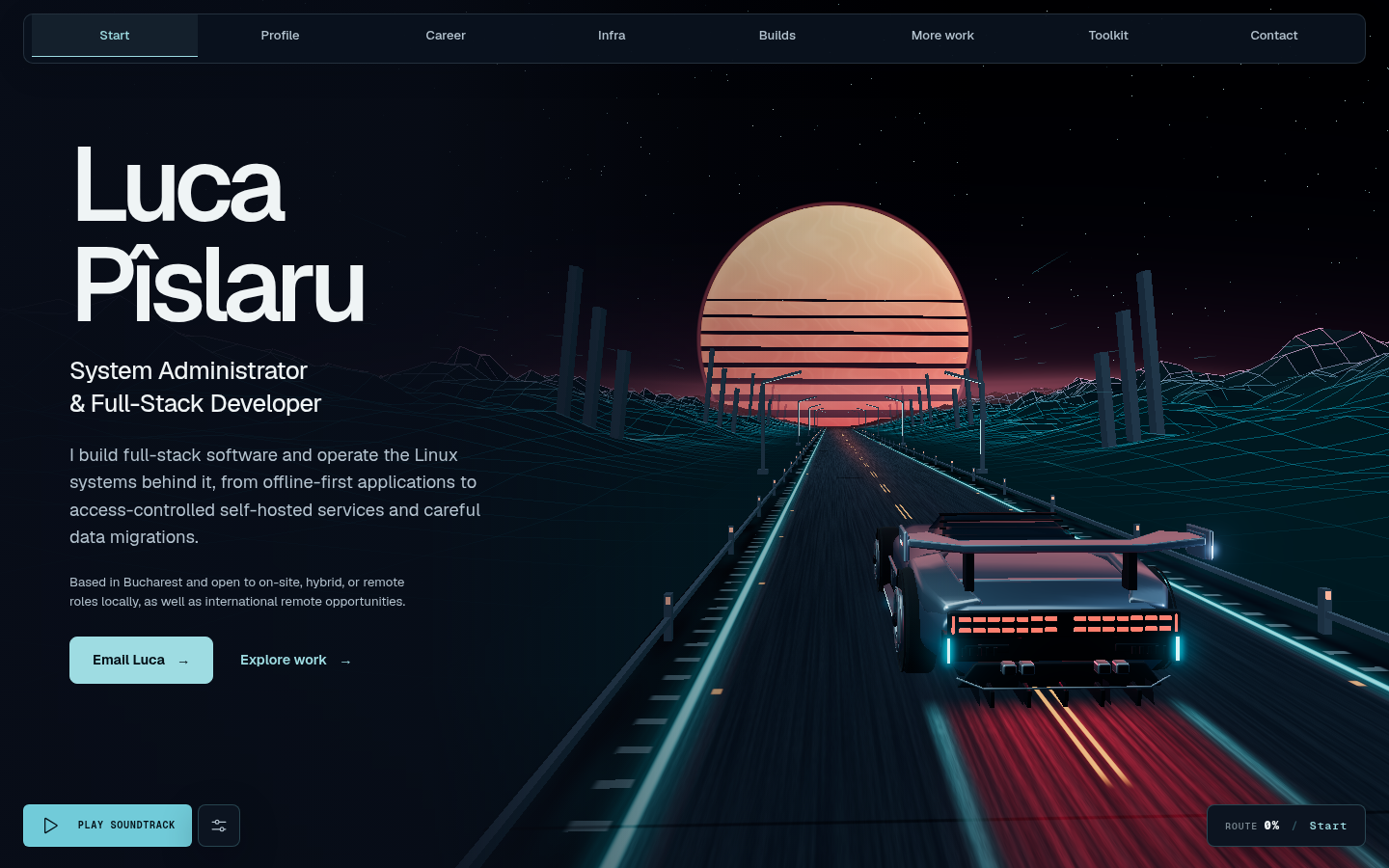
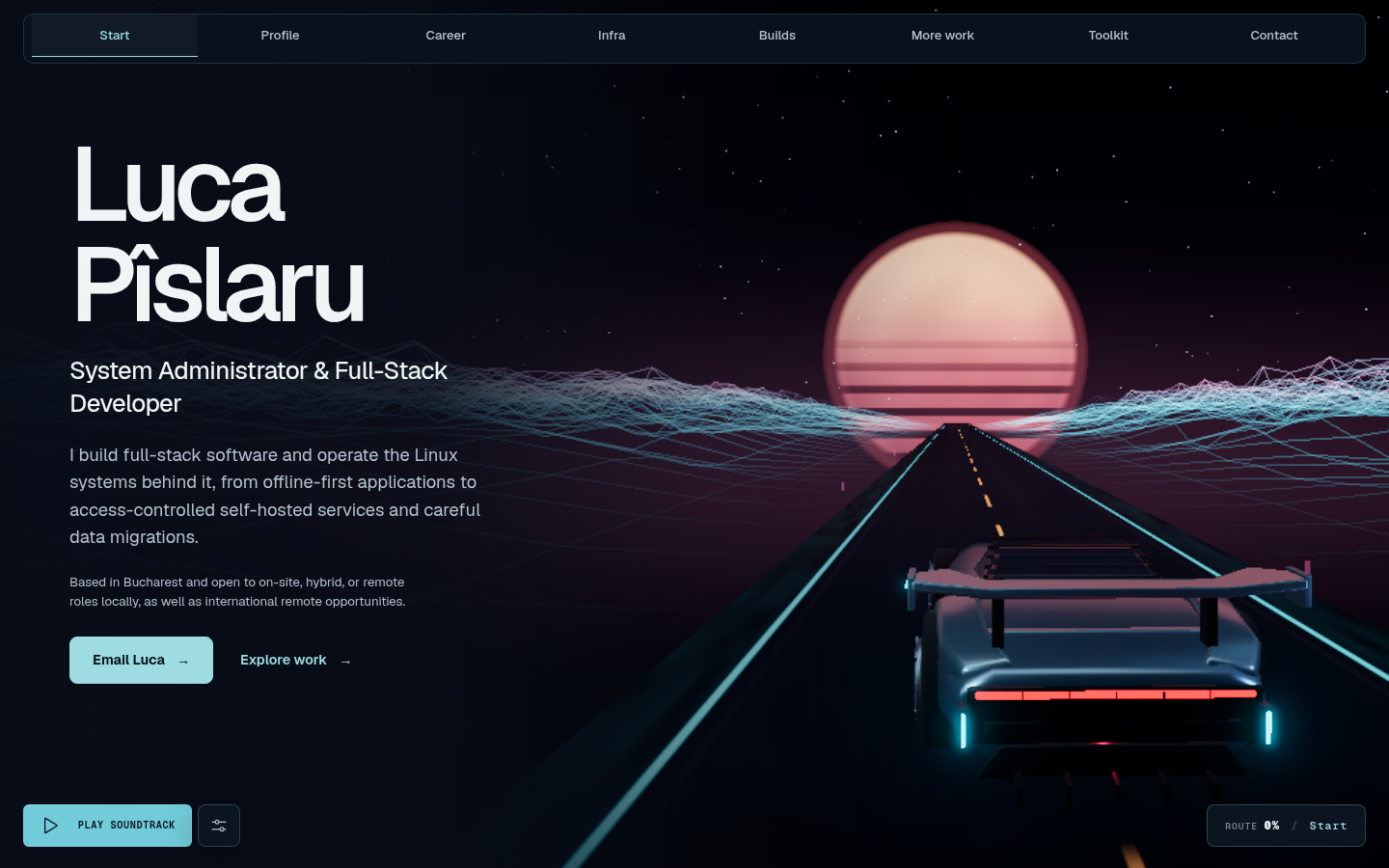 BEFOREAFTER
Travel, settle, arrive.
Actual hardware-backed Chrome capture: forward acceleration, coasting, reverse document scrolling, and navigation to Infrastructure, Selected builds, and Contact. Silent recording with the High maximum-quality preference and normal adaptive behavior.
Signs with their own space.
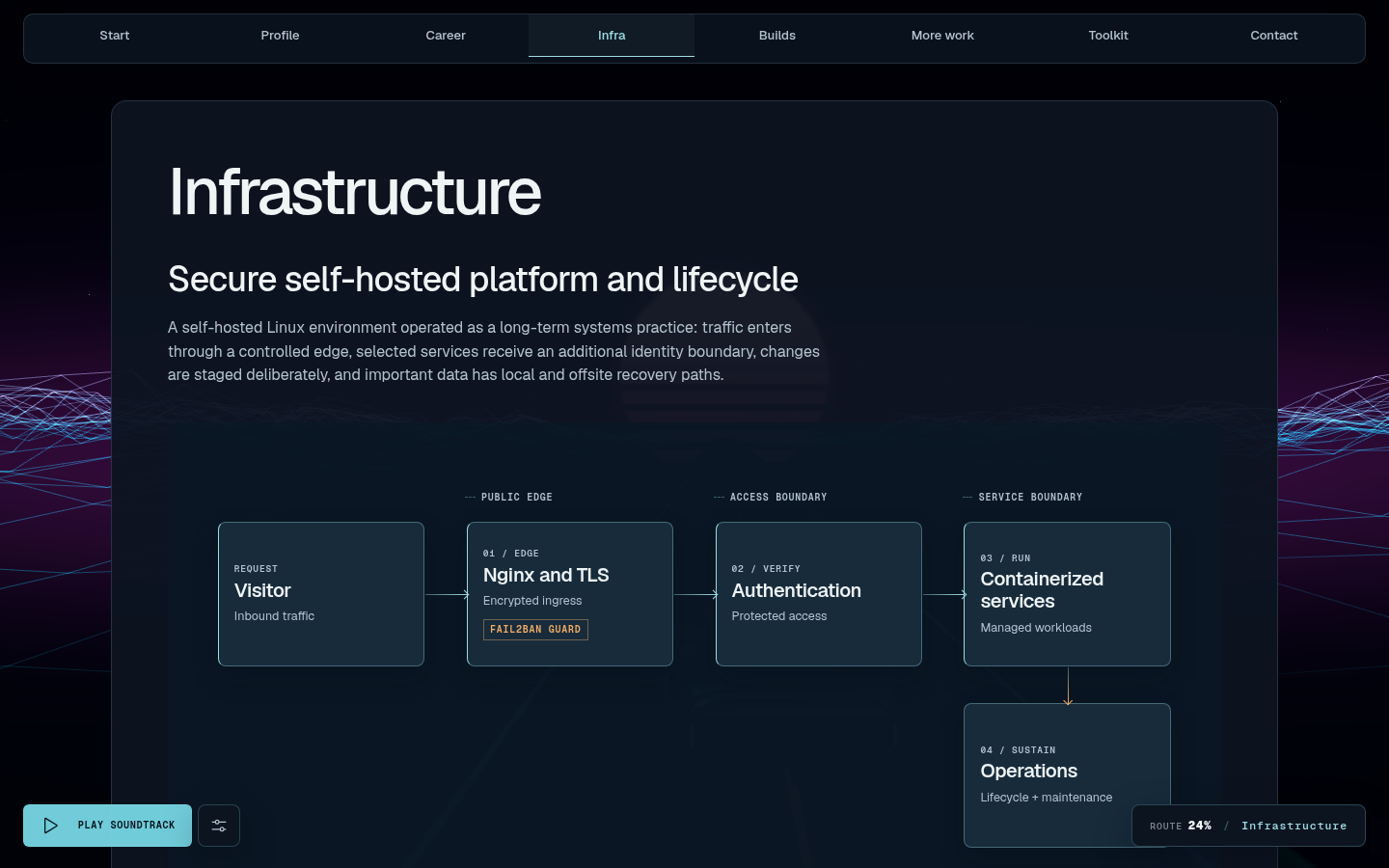
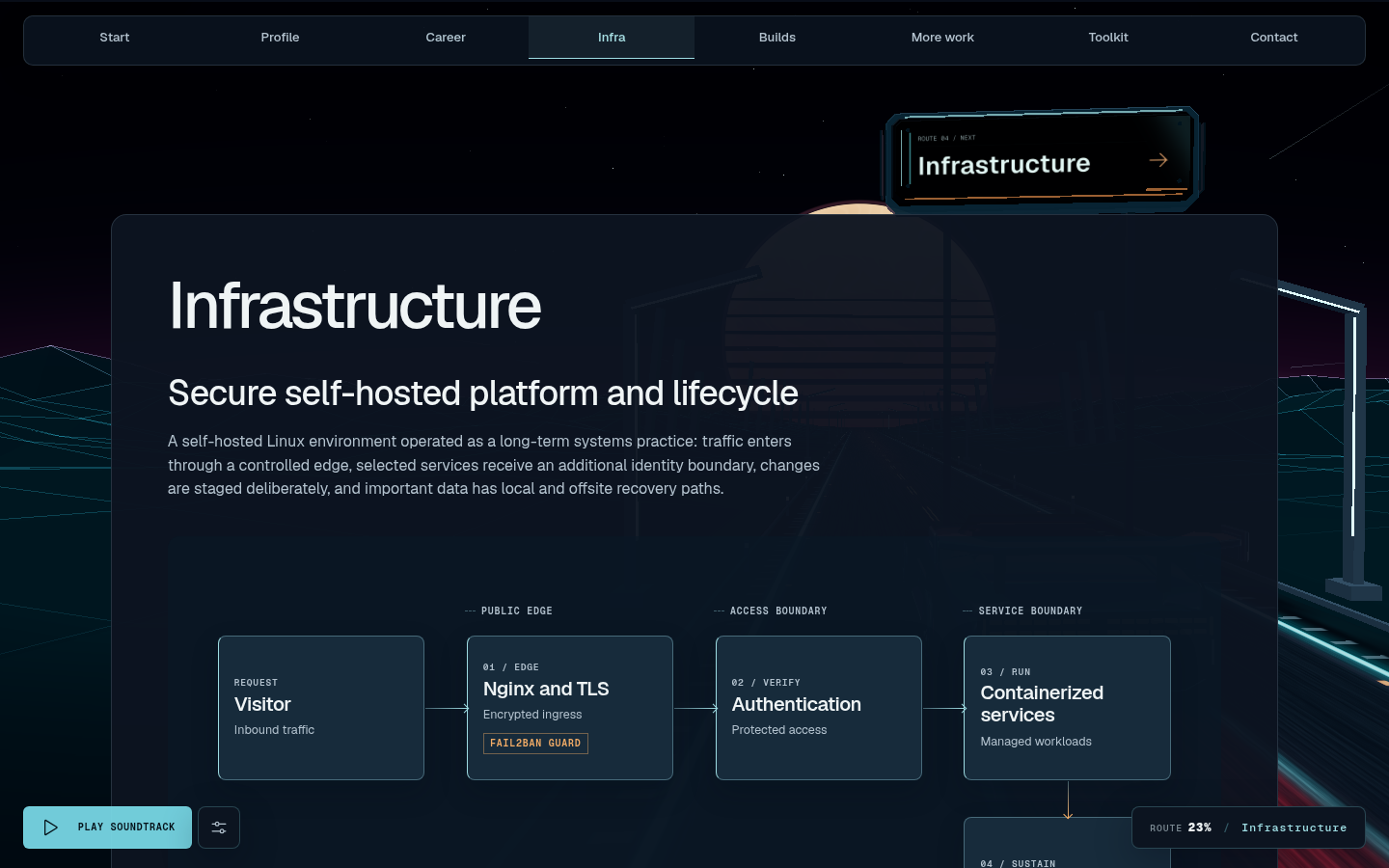
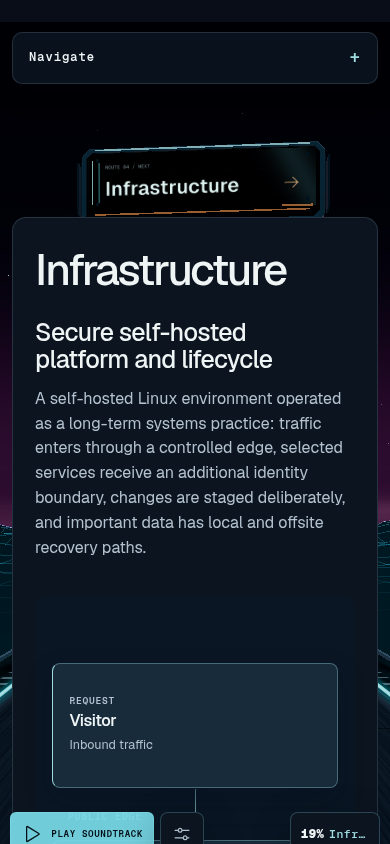
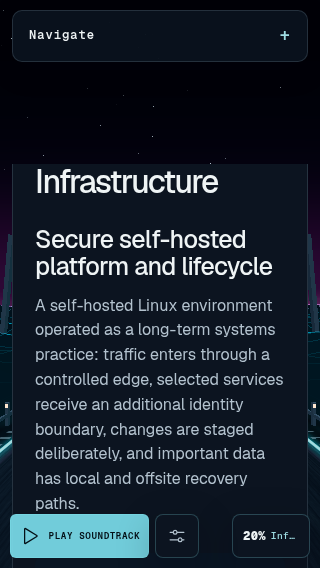
A more memorable grand tourer.
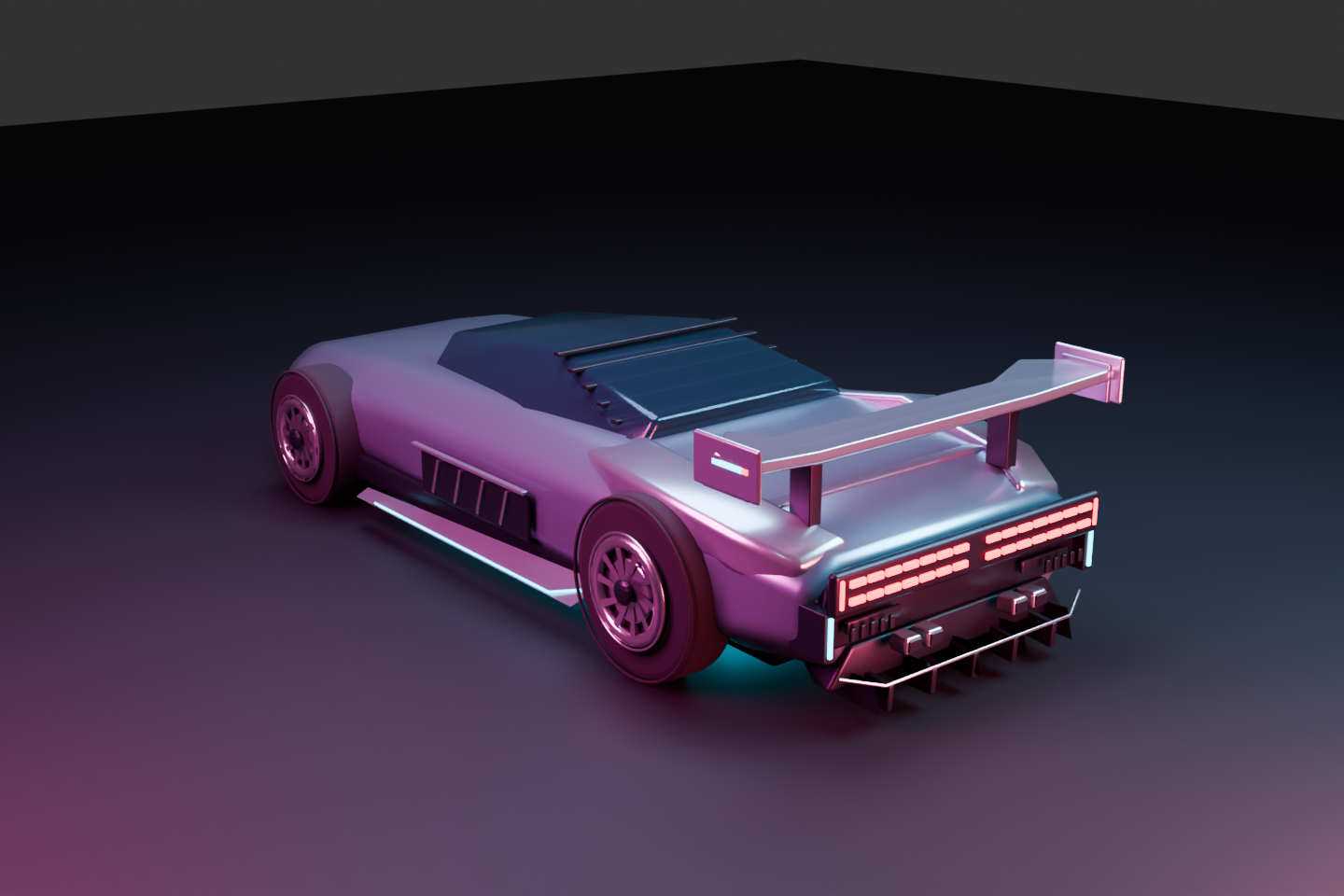
Editable Blender source retains the individual parts and look-development setup. The runtime export batches materials and preserves four independently rotating wheels.
The night drive travels with you.
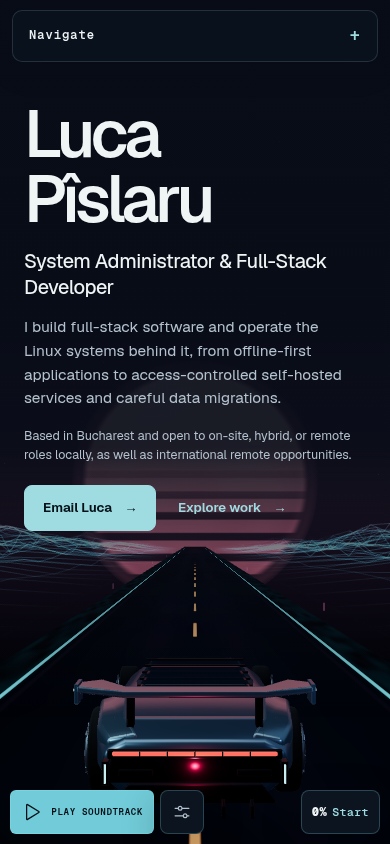
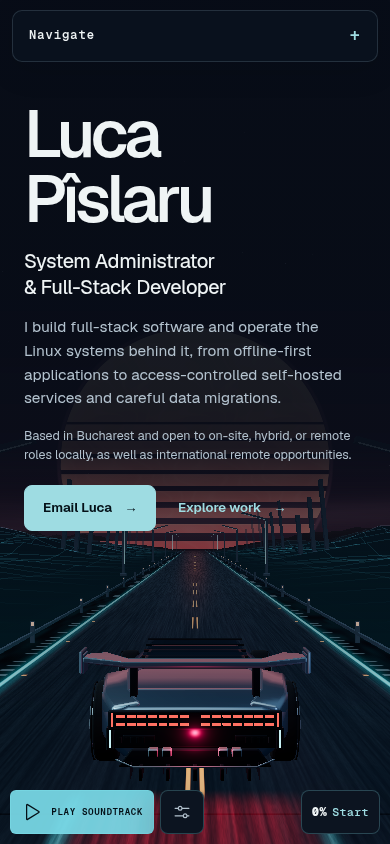
The work stays central.
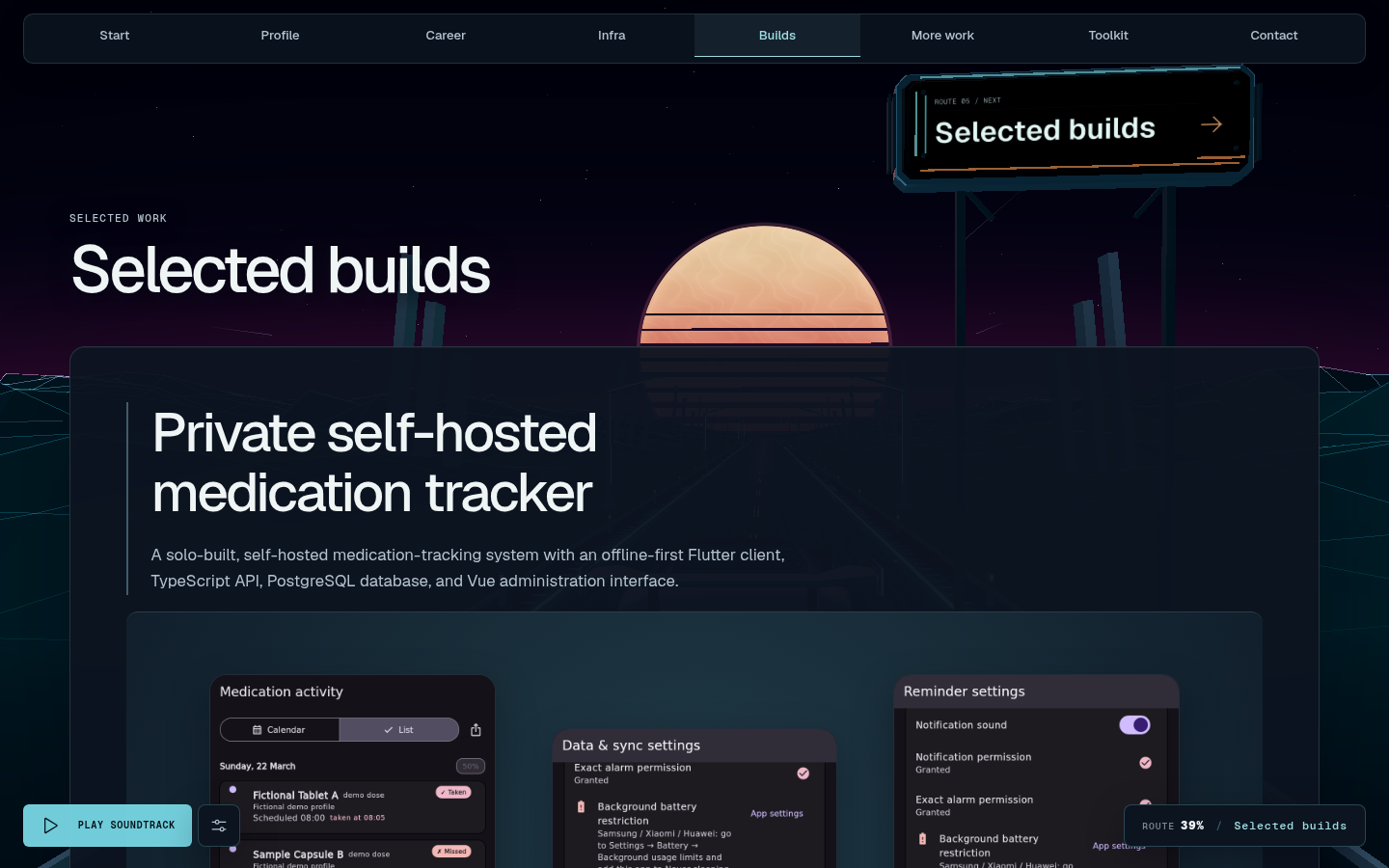
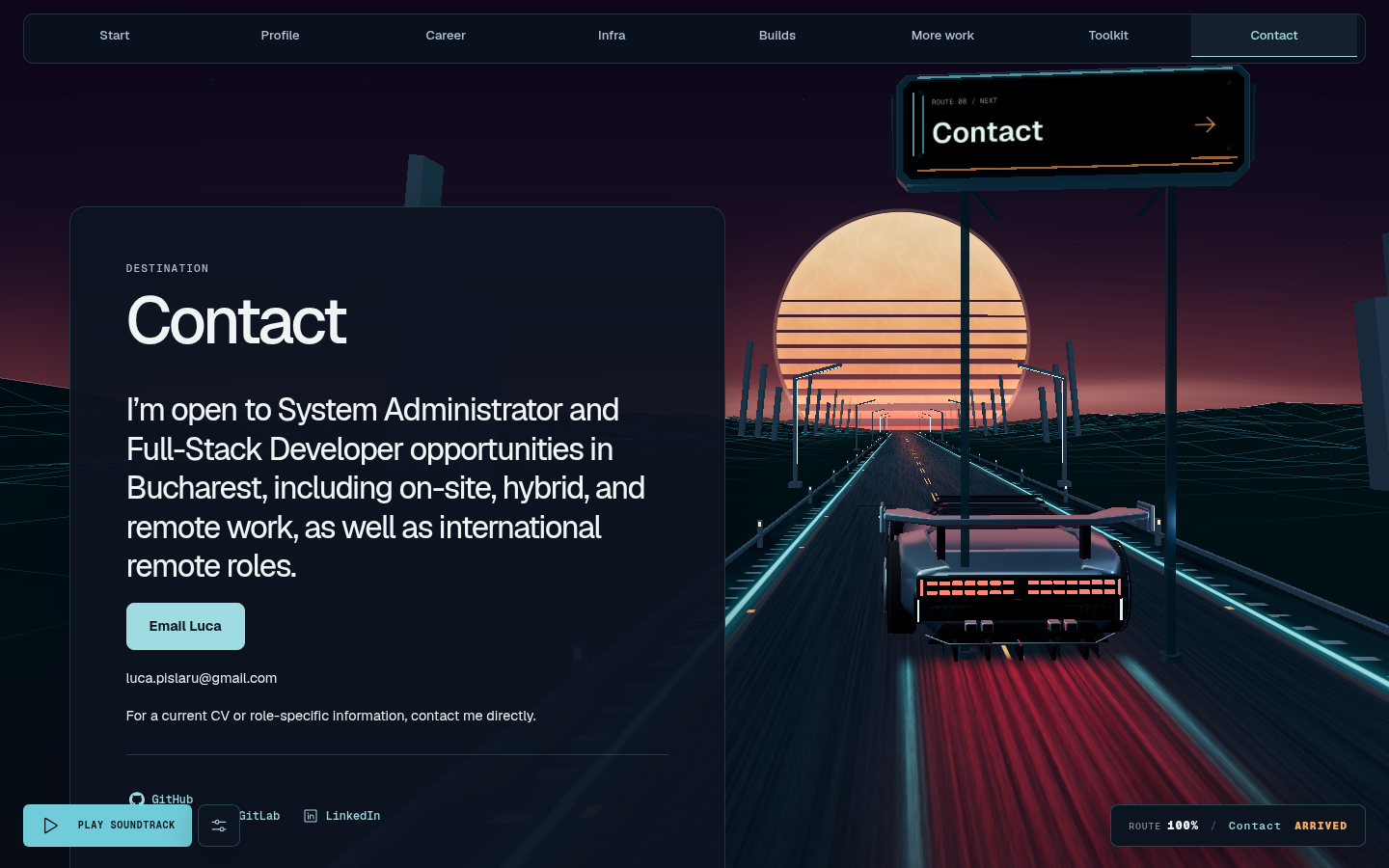
Verified, with clear limits.
Approved wording, links, metadata, section order, and all 15 approved media/audio files match the baseline. Asset validation, typecheck, client/SSR build, prerender, artifact verification, and transfer checks pass. Static and reduced-motion views retain the full content.
Host Chrome uses the Intel hardware GPU: desktop samples averaged 63–65 fps across opening, reading, and native scrolling at 1440×900, with p95 frame time 20.9 ms. Physical phones and high-DPI displays remain unverified. The untouched baseline already had nine failing unit assertions; tests were preserved. Ready for visual review.